
A Christmas gift for the mom who quilts at both ends of the dining table
When Mom quilts at the dining table, a project can cover both ends before lunch. By dinner, every clip and bobbin has to move. The Christmas gift worth considering is a removable set of sewing compartments that follows the quilt instead of claiming the table. Start with a single block she is making and map how the tools move while she pieces it.
Plan Mom's removable quilting tray in ForgeGrid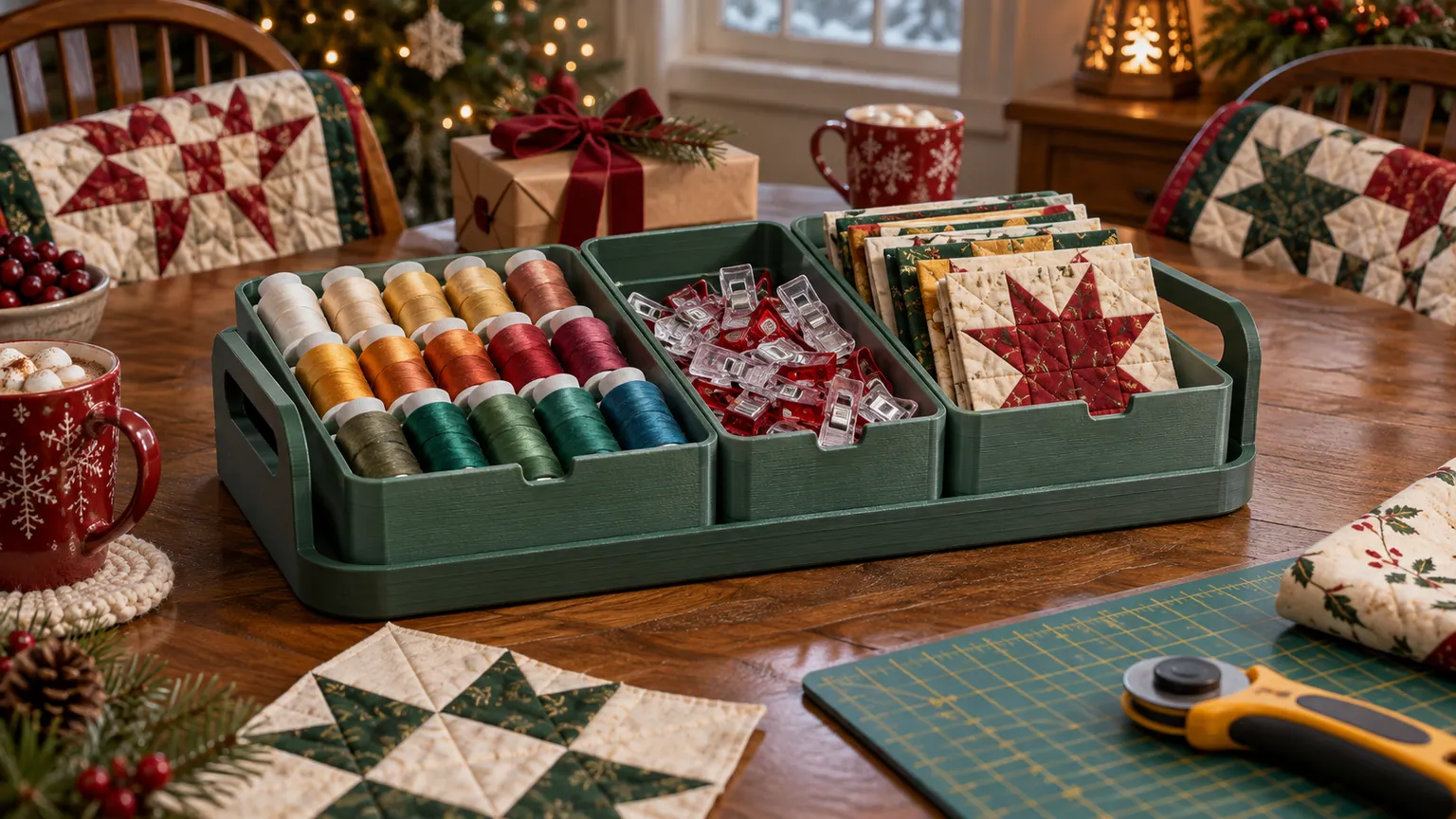
Map the journey of a half-finished block
Place a folded fabric square where Mom usually pieces and another where she checks the layout. Ask her to talk you through a block. Where does she park a seam ripper? Does she carry clipped pieces in a stack, or lift a container of clips to the opposite end? The motions tell you which items deserve a travelling bin and which need a fixed spot.
For example, pressing, stitching and trimming can happen at different ends of the room. A small open cell of clips can follow a stack of fabric. Thread for the current block can stay by the machine. A long quilting ruler may already live happily in a wall rack and add nothing to this particular gift.
Size the tray for where it sleeps
Measure the cupboard, shelf or drawer where the whole project waits between sessions. Use the narrowest clear opening and note how far a loaded tray can slide in. A shelf lip can catch a tall spool even when the rest of the cupboard is roomy. Add clearance for fingers where Mom will actually lift the tray.
Outline the available area on cardboard. Put the tallest spool, a closed needle case and the longest everyday marking tool inside the outline. If placing a hand around the thread forces it into the space meant for clips, revise the plan before entering any measurements. Leave rotary cutters in their usual protective storage unless she specifically wants a measured home for the closed tool.
Choose compartments by changeover time
A lift-out cell for the current project's thread colors helps when several quilts alternate on the same machine. An adjacent open area for the tools she reaches for on every project stays populated. Try a temporary paper label with the quilt's name. Make labels permanent only for categories that survive more than one project.
Ask Mom to rehearse clearing the table. She should be able to gather the tools and set dinner down without sorting every item first. If pack-up requires emptying three cells into a fourth, simplify. Two generously sized modules might outperform a beautiful row of tiny ones.
Make the layout part of the present
In ForgeGrid, plan the measured storage space and arrange the cells you have identified. Invite her to veto one compartment based on experience; she knows which things snag a sleeve or disappear beneath a block. Submit the layout and its constraints for studio review when the working arrangement feels right.
Questions & answers
What's a thoughtful quilting Christmas gift when Mom owns plenty of fabric?
Give her easier setup and pack-up for the projects she already loves. Measure where tools are stored between meals. A small lift-out group that keeps thread and notions with an active quilt can be more useful than choosing another fabric color on her behalf.
How should I measure bobbins that already have protective clips?
Measure the loaded bobbin with its keeper attached. Include any protruding clip ends and space for fingers to lift it. While planning, set a few real bobbins beside one another to see if their thread tails catch.
Can an organizer help someone who switches between hand piecing and machine quilting?
Give each activity a removable working group and reserve a common spot for shared supplies. If the hand-piecing kit moves to a sofa, keep its needles in their closed case when moving them.
How do I surprise a quilter without rearranging her sewing system?
Make a cardboard footprint, take notes about where her supplies already go and wrap the plan. Ask her to place the real objects on it before submitting anything. She can keep her existing order while you handle the measuring and configuration.
Will a fitted ForgeGrid design arrive automatically after I arrange the cells?
The online layout is a way to develop a custom fit request. Submit the checked dimensions and identify the sewing tools that matter most. Discuss the studio's fit review, pricing and production timing before the finished piece is ordered.