
One drill-bit drawer for hex bits, long extensions and the sizes you reach for
Stand your short quarter-inch hex driver bits together, lay the long extensions flat and give round-shank drill bits another location. These three groups ask different things of a drawer. A short driver bit is easiest to identify from above; a long extension needs room at the handle end; and a twist drill deserves a place where its cutting edge will not knock into the next one.
Shop the 20-position ForgeGrid Hex Bit Bank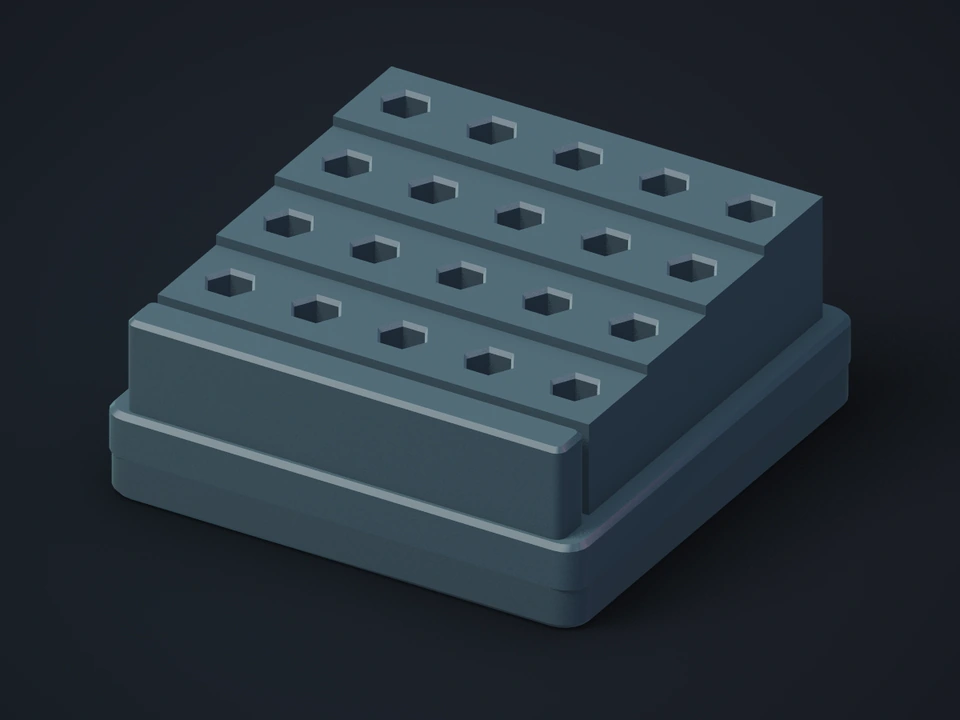
Start with the bits that earn their space
Empty the driver case onto the bench. Put the bits you reach for every week in one line, the specialty bits in another, and duplicates in a small cup. Look at the shank as well as the working tip. A bit with a hex-shaped tip does not necessarily have a quarter-inch hex shank. The ForgeGrid Hex Bit Bank is designed for quarter-inch hex shanks at its original 100% scale.
The standard bank has twenty open positions on a two-by-two grid footprint. Give your daily working set the front rows. If you regularly go through the same Phillips size, reserve a second position for a spare rather than forcing the entire drawer into one-of-each order. An empty spot among tools you use tells you more than a full row of bits you forgot you owned.
Give the extension its own straight run
Measure the full extension, including any quick-release collar. Then place a strip of card under it and sketch where your fingers lift it. An extension can fit along the back of a drawer and still be awkward to remove if the collar is wedged against the wall. Try rotating the collar toward the hand that opens the drawer, or leave a short open area at one end.
Check the bank with your tallest bit installed
The store lists the standard bank at 84 by 84 mm across and 36 mm tall. Mark the square on your existing liner, then stand the tallest intended bit beside it. The relevant measurement is the height of a bit seated in its holder. The portion that goes into the socket should only be counted once. Print the product's paper fit guide at actual size to check the footprint; a flat sheet cannot tell you whether a loaded bit clears the drawer above.
Make returns as easy as pickups
Keep the size markings facing the front where possible. Use the optional front label for a family name such as TORX or DRIVERS. A ten-character label identifies the bank; a quick sketch inside the drawer can identify each position. Shop the Hex Bit Bank when the scale and bit format match your tools. Keep longer drivers in their flat lane if they make the loaded bank too tall.
Questions & answers
Does the Hex Bit Bank hold ordinary round-shank drill bits?
Its specified format is quarter-inch hex shanks at 100% scale. Give round shanks a dedicated drill index or ask for a separate organizer sized to those diameters. A loose round drill may lean against the cutting edge beside it.
Is it wise to choose a larger scale for chunky driver tips?
The scaled design changes its openings as well as its outside dimensions. For a precision shank fit, begin with the stated standard scale. If a large tip crowds a neighbor, try an empty neighboring position or request a different layout.
How can I tell whether the bank fits my grid?
The standard footprint is two pitches by two pitches on the compatible ForgeGrid base. Compare the actual-size template with your base or use the holder loose on the bench. Check any separate grid system by its own interface dimensions.
Do I get bits with the holder?
The item is the organizer. Arrange the bits you already own on the footprint first, decide whether the twenty positions suit the set, and choose the finish and optional front label on the product page.