
Which light makes a photo lithophane look best on a shelf?
Start with a broad, cool-running LED light positioned behind the panel, facing toward the picture. Look from the place where you will normally see it. The goal is an evenly lit face or landscape, with the brightest spots in the photograph itself. If the first thing you notice is the shape of a bulb, change the position before buying another lamp.
Shop the Coastal Light Panel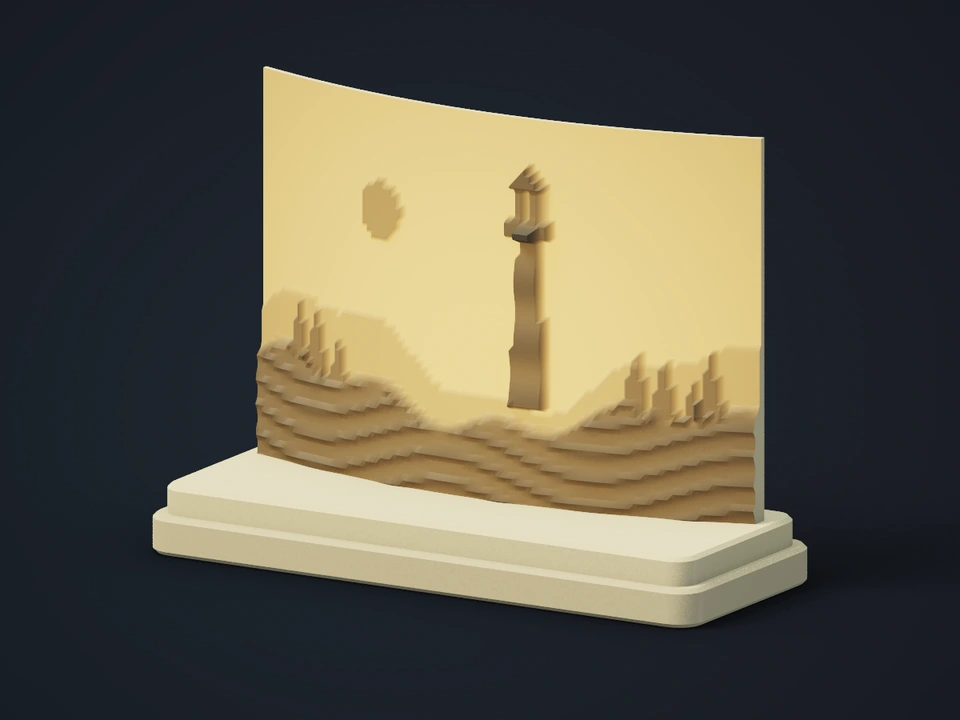
Let the photograph tell you what to adjust
Thin areas transmit more light and heavier sections stay darker. A bare LED aimed into one small patch can put an unwanted bright circle over somebody's face. A lamp behind only half of a curved panel can leave the edges uneven. Turn the lamp off briefly and then on again. If a glowing dot appears where the photograph should be pale gray, the dot is probably the source showing through.
Pick a few details to judge in every arrangement. In a portrait these might be the cheek, hairline and space between the eyes. In a coastal landscape choose the sky, the horizon and a darker foreground. Keep the room lighting similar while you compare so the change you see belongs to the lamp placement.
Try the same light at two positions
Mark the original position of the stand with a slip of paper. Put the LED behind it with the manufacturer's specified clearance, then move the lamp farther back if the shelf allows. Look for a change in coverage at the edges and separation between pale areas. Moving back can spread illumination across a larger face, but may also leave the picture too dim. If space is tight, a wider light source may fit the display better than adding distance.
Try shifting the lamp slightly left and right on a curved panel. A small adjustment can balance the two sides from your favorite chair even if the arrangement does not look perfectly centered from above.
Warm and cool light tell different stories
Borrow two LEDs with different color settings if you have them. Keep their brightness as similar as possible. Warm light may suit a wedding image in a room with wood tones; a cooler white can suit a coastal view on a pale shelf. Personal preference matters more here than a numerical color-temperature target. Compare the actual piece in your room, especially if the shelf is much brighter by day than at night.
Use a light intended for indoor display and follow its instructions for clearance and ventilation. A separate cool-running LED is the lighting option identified for ForgeLab's Coastal Light Panel. Give the stand a stable surface and route the cable where it cannot drag the lamp into the print.
Pick a ready-made scene or bring your own photograph
The Coastal Light Panel is the shop option for a ready-designed curved coastal scene with a freestanding base. Its light is separate, so you can use the setup you have just tested. If you want your own picture, the LumiForge builder previews a hanging photo ornament. A personal photograph on a curved tabletop panel is a custom project; include a picture of the shelf and its available depth in your inquiry.
Questions & answers
Why does my lithophane look washed out?
Check whether daylight or a bright lamp is shining directly onto the front. Try the piece with the front light reduced and its backlight unchanged. Then compare brightness behind it to find a more readable balance.
Will an LED strip show individual dots?
It can when positioned close to the surface. Test your actual strip and adjust its distance or choose a lamp with an existing diffuser. Leave the clearances required by the light manufacturer.
Can a window be the backlight?
Yes, available daylight can illuminate the image. Its direction and brightness change during the day. A separate LED gives more predictable results on an interior shelf or after sunset.
What is included with the ForgeLab tabletop panel?
The listed Coastal Light Panel includes the translucent curved coastal scene and its tabletop base. The separate light is chosen by the customer. The hanging custom photo ornament uses a different builder and display method.