
A pet memorial gift when your favorite photograph is blurry
You don't have to replace your favorite memory with a perfect photograph. Start with what you remember most clearly about your pet, then find the picture that carries that detail into a small keepsake. It may be a soft side view of a dog resting his chin on your knee, even when another picture shows every whisker.
Preview a keepsake of my pet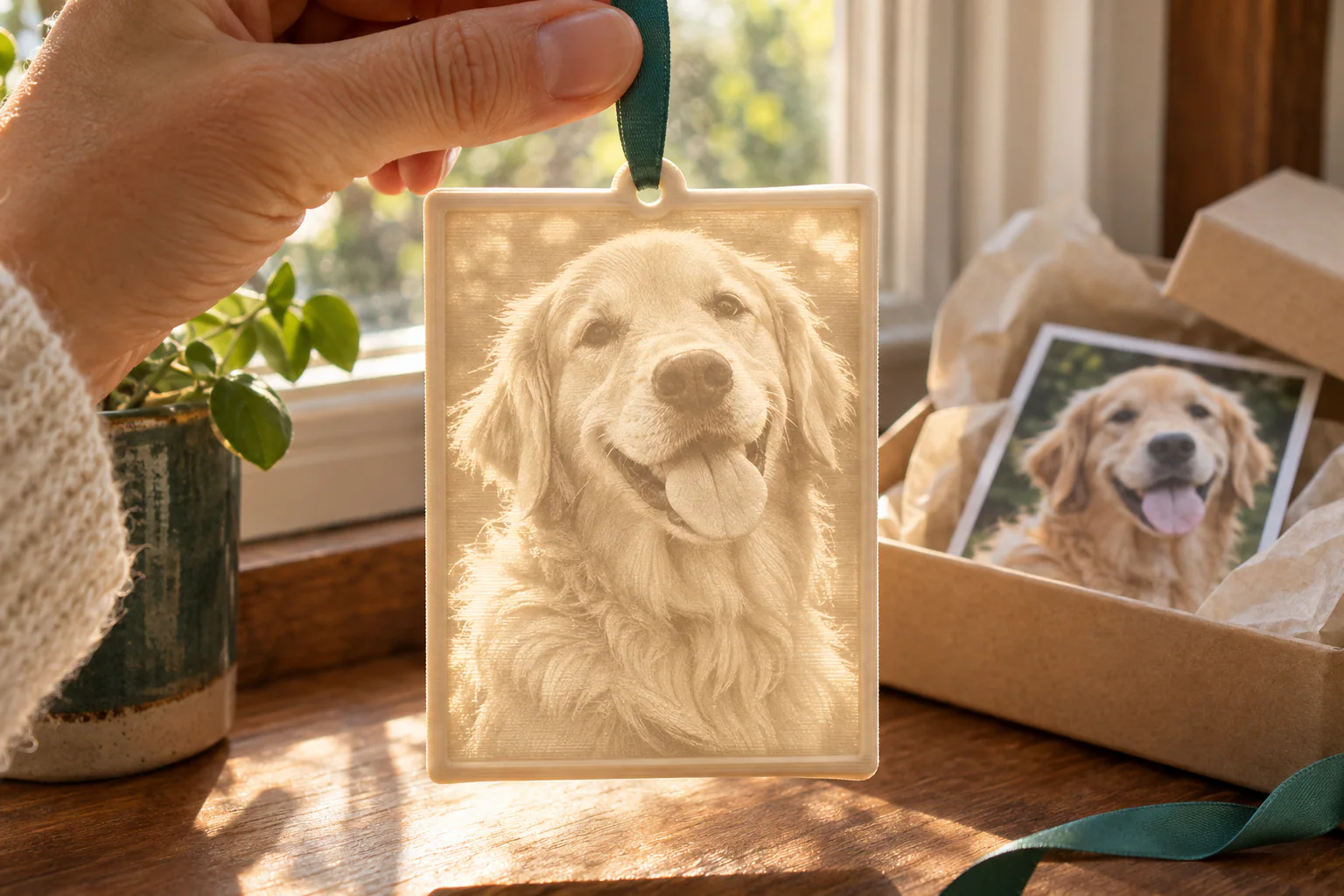
Decide what must stay recognizable
Write one sentence about the photograph before editing it. “This is how he waited for me at the door.” “This is the ear that always folded over.” The first sentence calls for a pose and a bit of the setting. The second calls for an outline and room above the head. That choice is much easier to make now than after a large crop has removed the very detail you wanted to keep.
Find the original file or ask the friend who took it. A screenshot of an image in a message, especially one showing the whole chat window, gives you a smaller working picture. Save an untouched copy before experimenting with the gift version.
Compare three kinds of imperfect picture
A slightly soft portrait can still work when the eyes, ears and nose occupy separate areas of light and dark. Try it without sharpening. A motion-blurred running shot can work as an outline if the posture or tail is unmistakable. It is harder to use when a blur runs through both eyes. A clean side view with the face turned away may carry the strongest likeness of all if it shows the silhouette you recognized from across the room.
Put the three pictures at about the same displayed width. Ask someone who knew the pet which one they recognize first. Tell them they do not have to select the sharpest. Their answer may capture something the camera specifications cannot.
See what the relief keeps
In LumiForge, compare the original framing with a closer crop, under the same virtual backlight. A tighter frame makes what is already there larger. It does not supply a missing eye or restore a nose that moved during the exposure. Be cautious with filters that invent fur or reshape teeth. When exact likeness matters, a quiet, slightly soft original can feel more faithful.
When the photograph is blurry at the edges but sharp in the middle, try excluding the edges entirely. For a strong silhouette, keep the space around ears, whiskers or tail so the outline has room to read.
Choose a display that suits the person receiving it
A memorial ornament can hang beside a reading chair or catch daylight in a kitchen window. Pick a size that feels comfortable in the hand as well as in its display spot. If you're buying for someone else, give them a private choice between two previews. They may want the pet's name on the accompanying card and the portrait itself left simple. Once the photo feels right, send it for a studio print review.
Questions & answers
What if there is only one photograph?
Try a full pose, a square close-up and a profile crop from that one file. Compare them at the same width. There is value in preserving a familiar gesture even if individual hairs remain soft.
Should I use AI to restore a pet portrait?
Keep the original and compare any edited copy carefully. Changes around eyes, teeth and distinctive markings can make a face feel unfamiliar. Choose the copy that looks like the animal you knew.
Can a still image from a video work?
Review several adjacent frames and choose the one where the head is momentarily still. Export the best available frame, then try it in the builder before deciding whether it carries enough detail.
Does a pet memorial have to include a name or dates?
No. A photograph can carry the memory on its own. Names, dates and a few words can go on a separate card so they remain legible without taking room away from the portrait.