
Organize a bobbin drawer for two different sewing machines
File bobbins by machine first and thread color second. A nearly full bobbin in precisely the right shade is tempting to grab, and two similar-looking bobbins may belong to different systems. Give each machine a named section you can pull out and carry to its side of the sewing table. Keep the identification with the tray when it leaves the drawer.
Build a ForgeGrid sewing drawer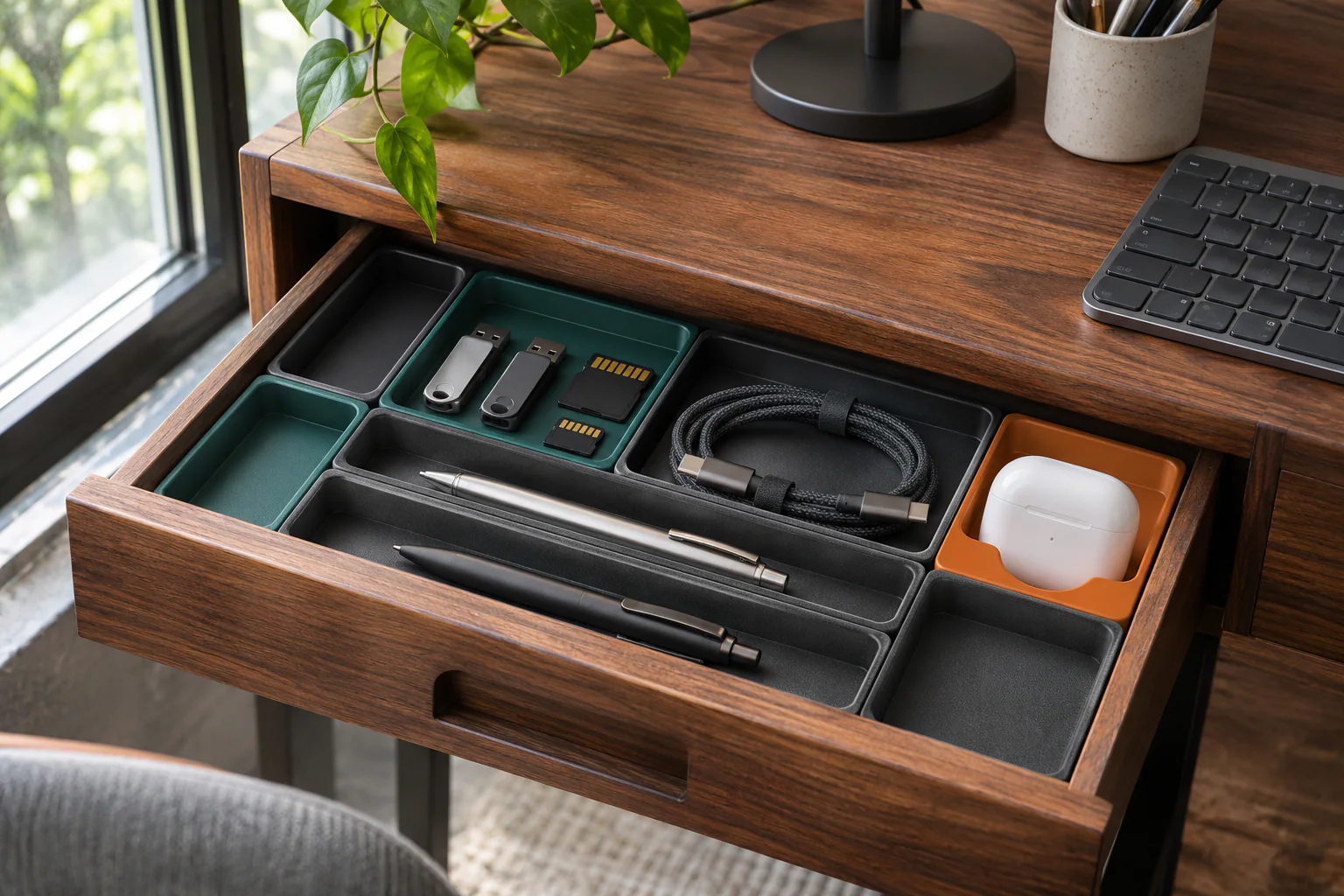
Build the first label from the machine manual
Look up the machine model and its specified bobbin type or part code. Brother’s instructions for the SE2000, for example, identify the SA156 type and a height of 11.5 mm. That is an example for a named machine. Use the manual for each of yours, including the brand and part code on any original bobbin packaging.
Make labels that a second person can read. “Brother SE2000 / SA156” carries more information than “clear plastic.” If your second machine takes another family, give that family its own label, even if the colors and finish happen to match. Keep unverified finds in a small envelope until you can identify them.
Plan around a wound bobbin and the way you remove it
Measure the rim diameter and overall height of a correctly wound sample. Measure again with any thread-tamer band or clip you normally leave attached. A low pocket exposing the rims can allow two fingers to lift the bobbin. A deeper circular hole may look tidy while making a partly unwound bobbin difficult to fish out.
Lay six wound bobbins in a line on paper and try lifting the middle one with the two adjacent positions occupied. If threads pull one another along, increase separation, change the orientation or secure the tails. Mark the distance that worked on the paper before measuring the usable drawer width.
Make room for thread color and active projects
Suppose one machine has twelve regular bobbins and the other has eight, and you currently have three projects in progress. Two machine-specific trays plus three labeled project spaces let you see both ownership and work in progress. Keep each project pocket inside its machine’s zone, or mark the machine name on the project card. An empty tray position then shows which bobbin is in use.
If you frequently match top and bottom thread, include a slip of paper with the spool number or use a matching label on its bag. Two dark navy threads can look almost identical under the work light. The label preserves that distinction after you put the project away for a week.
Build two trays you can tell apart across the room
In ForgeGrid, lay out one removable section per machine and leave room at the front for fingers. Choose distinguishing labels or finishes as a second cue. For a truly fitted bobbin insert, record the largest wound sample, clip and tail arrangement in your request. A row of simple open bins can be a better choice when you use sleeves, cases or several verified bobbin styles.
Questions & answers
Do two bobbins with the same rim diameter fit the same machine?
Rim diameter alone does not establish compatibility. Check the manual or manufacturer support for the exact machine, including bobbin type, height and other requirements before using a substitute.
Should empty bobbins have their own drawer?
A small empties bay within each identified machine tray works well. It keeps the type visible when there is no thread color to distinguish the bobbins and makes restocking easier.
What should I do with unlabeled bobbins I inherited?
Keep them out of the ready-to-use rows while you investigate. Compare them with known manufacturer parts and identify their intended machine before sewing with them.
Can one tray hold my embroidery and sewing bobbins?
Yes, when each section clearly names its machine or verified shared type. Separate project rows can still be useful even if both machines accept the same bobbin.