
A Christmas gift for the home barista who weighs every shot
The person who weighs every espresso shot probably has strong opinions about a new tamper. They might have no opinions at all about the awkward drawer where it rolls into the spare baskets. Designing that drawer around their existing setup gives them a Christmas upgrade without replacing a single piece of coffee gear they chose on purpose.
Plan a ForgeGrid espresso drawer around their tools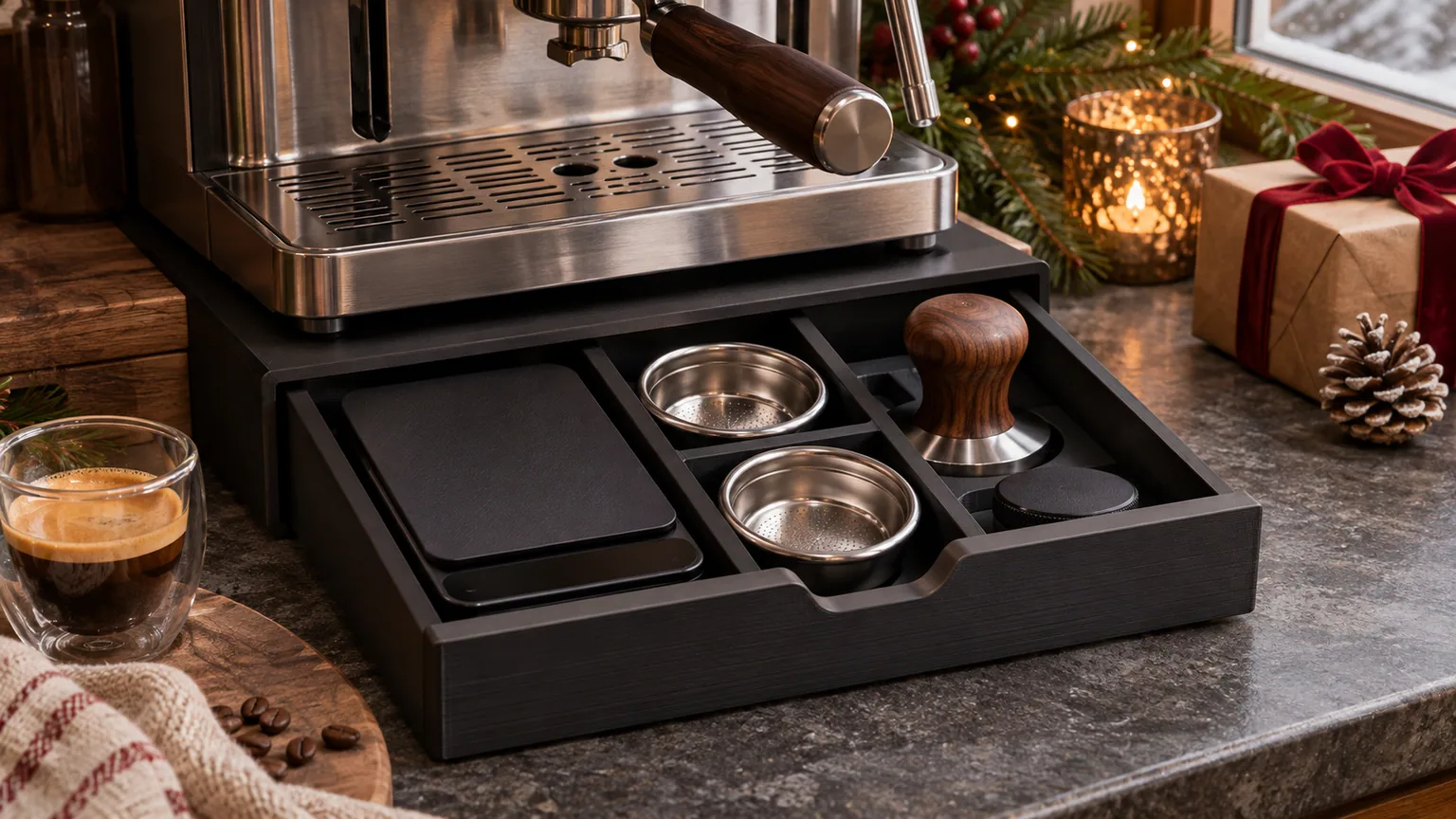
Watch the order of one ordinary shot
Ask your home barista to talk you through a morning coffee. Note which items they touch before coffee grounds appear, which are used while pulling a shot and which are only needed for cleanup. A common split is scale and dosing tools in frequent reach, spare baskets further back and cleaning supplies somewhere separate. Build for their actual sequence, even if the arrangement looks unconventional to you.
Measure the parts people usually forget
Take the outside width, depth and closed-drawer height at the tightest usable points. Then measure the scale with its mat in place, the broadest rim of the baskets and the tamper where it will rest. Basket size and portafilter names alone are not outside measurements. Include a finger path to lift a shallow scale without touching its weighing surface.
As a paper exercise, trace the scale on a scrap of paper, then draw a second outline around the charging plug with its cable bent naturally. If you only store the scale unplugged, that second outline may be unnecessary. If the cable stays attached when stored, it can turn a neat rectangle into a much wider footprint. Record the configuration the recipient actually uses.
For the tamper, trace the widest end in its intended storage position and make a loose loop of paper around the grip. Reach into the proposed space with your usual hand. A narrow recess might hold the flat base neatly yet leave too little room to curl fingers around the handle.
Design a dry handoff between counter and drawer
Damp baskets need to dry before they get put away. Locate the storage drawer where a wet portafilter will not drip straight into it. Choose an easy-to-lift bin for the clean spare baskets and a separate spot for the scale. Leave the tamping station itself on an appropriate working surface. The gift is a home for the tools between coffees, and the contents should still be easy to take apart and clean.
Let the recipient approve the last few millimeters
Open the ForgeGrid kitchen example, enter the drawer’s real measurements and plan the cells around the traced objects. Print the full-size template at actual size and lay it in the empty drawer. Try the morning routine with paper in place. If the gift needs to be a surprise, wrap the paper plan and let the barista make the final call. Submit the agreed layout for a studio fit review.
Questions & answers
What can I give an espresso enthusiast who already owns a grinder, scale and tamper?
Organize their existing tools around one drink-making routine. That protects their equipment preferences and lets you budget for the drawer area they actually use instead of guessing at another premium accessory.
Does a 58 mm basket tell me how wide its storage pocket needs to be?
Measure the outside rim and anything attached in storage. The nominal figure alone does not tell you how the part rests, whether baskets nest or whether there is space to grip one without lifting all of them.
Can the scale sit in its own cell while weighing coffee?
Plan the cell as storage. Use the scale on the level surface recommended for that scale when weighing. A tight pocket or contact with a surrounding part could interfere with its use.
Is the photographed espresso layout the exact kit I will receive?
It is an example to open in the planner. Your drawer dimensions, cell selection and fit request determine the proposed kit. The displayed coffee gear is there to explain the layout.
What if the espresso drawer is in my partner’s apartment and I cannot measure it?
Start with a sketch of the workflow and a promise to design it together. Let the recipient provide the measurements and check the paper template before any fitted build is approved.