
How to keep fresh cotton swabs separate from used ones in a compact dab station
Choose two unmistakable destinations: a supply cup for fresh swabs and a separate spot for used ones. Put the fresh supply on the side where your hand begins the task. Place the used-swab destination where the hand finishes, with a clear route to empty it. That makes separation easier to maintain than two identical cups pushed wherever space happens to remain.
Plan separate fresh and used swab cups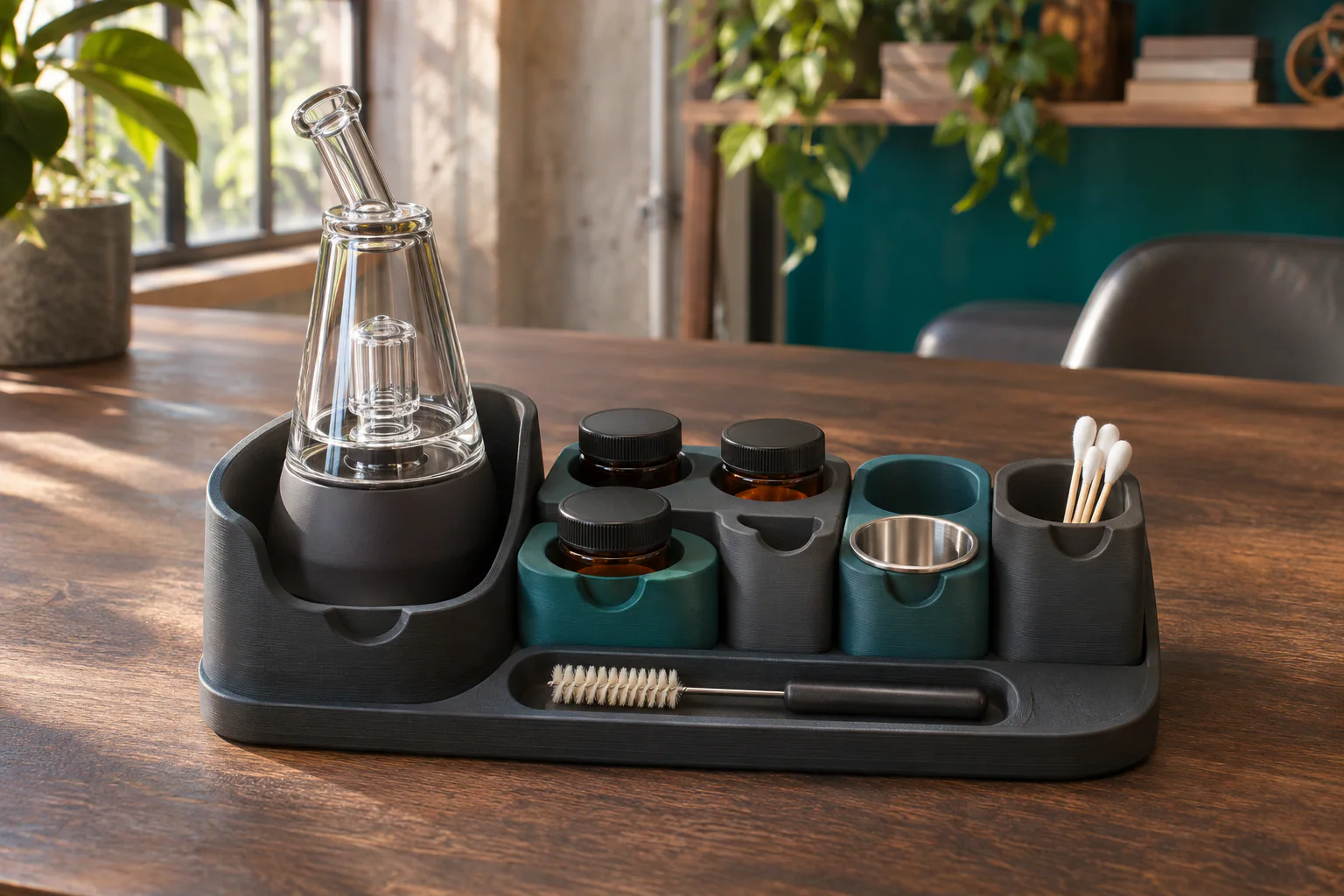
| Cup selection | Base width | Base depth |
|---|---|---|
| Clean swabs only | 164 mm | 112 mm |
| Separate clean and used cups | 220 mm | 112 mm |
| Space added by the second cup | 56 mm | 0 mm |
Follow one swab through the layout
Set two empty cups and the cooled device on the table. From your usual seat, pick up a clean swab, move your hand to the intended work area, and return the swab to the other cup for this dry run. Watch which other objects you reach over. If the return motion takes your hand back over the fresh supply, move one cup or mirror the accessory group. Repeat the motion with the space occupied by the largest jar as well. An arrangement that looks tidy empty can feel crowded when it is full.
Make the two destinations easy to recognize
Use plain names such as FRESH and USED on adjacent labels, or request a tactile or clearly differentiated treatment from the studio if that would help. Consider which labels survive refilling. A label on a disposable sleeve leaves with the sleeve. A mark on the station stays visible when the cup is empty. Add front and back to your sketch so the label faces the person using it rather than the wall.
Puffco’s Travel Case has a covered area for used swabs. If you want a covered waste compartment in a stationary design as well, request it explicitly. The standard DabLab options show separate open clean and used cups; a lid, liner or removable insert needs its own fit review.
Compare the space for one cup and two
The DabLab builder gives you a useful controlled comparison. For an illustrative 88 by 92 mm device footprint, choose a 165 mm device height, no jars, no tools and no grid. With the clean cup only, the plan is 164 by 112 mm. Switching on the used cup increases it to 220 by 112 mm. In this configuration, the second cup adds 56 mm of width. Other accessory combinations may already occupy that width, so repeat the comparison with your own setup.
Give emptying as much thought as refilling
Pick up the entire paper template or your proposed waste container and trace its path to the bin. Keep it away from open fresh supplies along the way. If carrying the full station is awkward, describe the kind of removable container you want and include its rim and height. Start a DabLab design with the cup options that suit the table you actually have. A small clean cup and nearby separate bin may suit a very narrow shelf better than squeezing in two open cups.
Questions & answers
Does the standard DabLab include a lid or sealed waste container?
The builder provides toggles for a clean cup and a separate used cup. Tell the studio if you require a cover, fitted liner or separate removable vessel. Those details affect capacity, height and the opening you need.
How many cotton swabs will my cup hold?
Capacity depends on the length, head size and how loosely the swabs sit. Try a typical batch in a similarly sized cup, then measure the opening and height you liked. A published count for a travel case does not transfer to a different cup.
Can I order a station with clean swabs only?
Yes. Enable the clean cup and leave the used cup off in the planner. If you already have a convenient waste container, map its position in the same tabletop sketch so the return motion stays easy.
Can the labels or feel of the cups help two people share the station?
Yes. Discuss permanent unit labels, different external textures or other cues during design review. Choose a layout that both people can identify when nearly empty, when the colored differences between contents are hardest to see.