
How to size a desk cup holder for a mug with a handle
A desk cup holder for a handled mug has to pass two tests. The cup body must enter and rest securely, and the handle must clear the rim of the holder. A mug can pass the diameter test and still rock on its handle. Measure the body, the handle height and the full side-to-side span before choosing a well.
Fit my everyday mug to a ForgeStation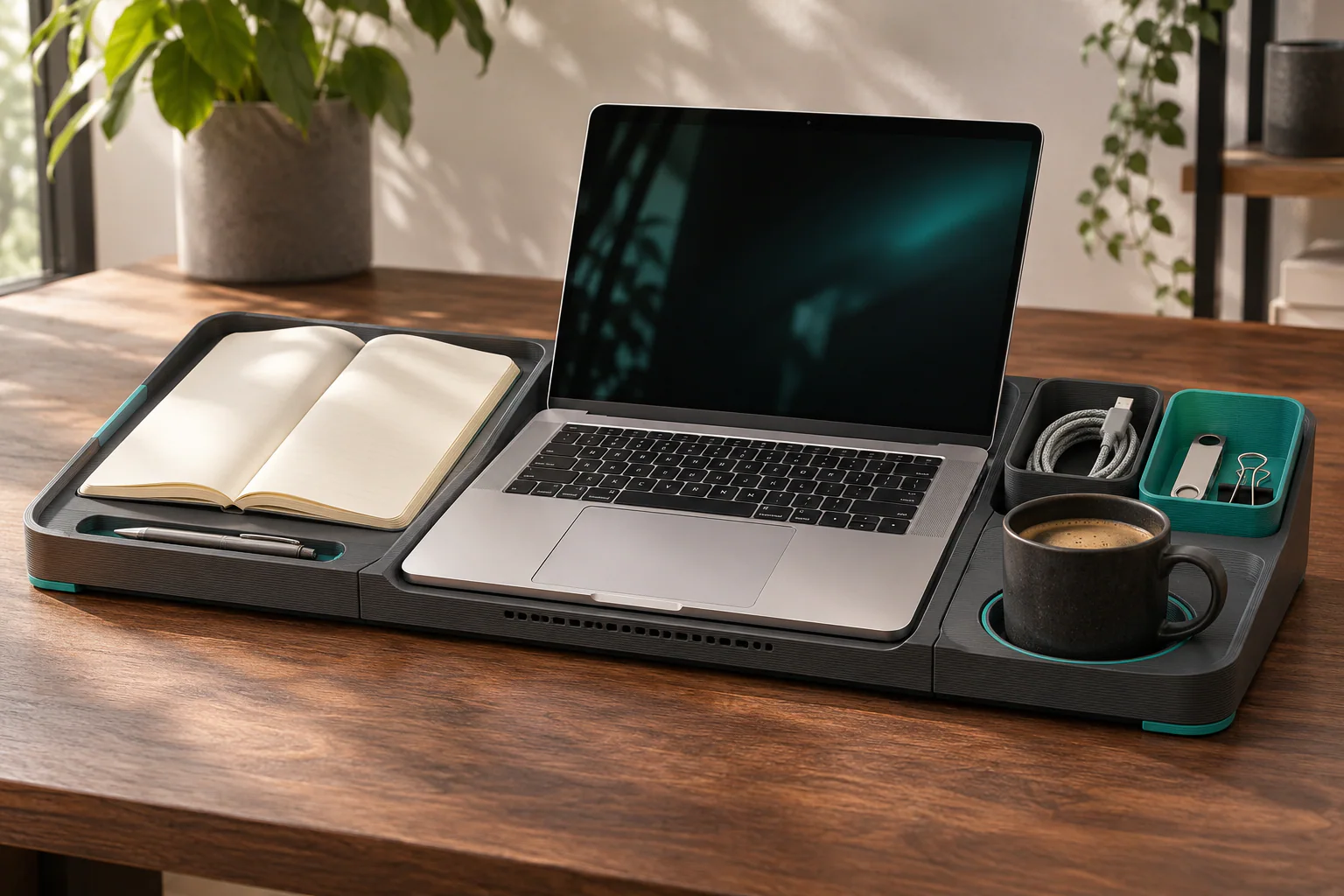
Measure the part that enters the well
Place the empty mug on a sheet of paper and mark its bottom outline. Now check the body a little higher up. Mugs with a foot ring, curved belly or flared side can become wider quickly. The relevant body width is the widest part that enters the holder before the mug reaches its resting position. For anything oval or handmade, measure in two directions.
If the base is narrower than the widest point, note both numbers and where the wider point occurs. Include the underside profile in a side photograph. A hollow foot ring that sits on a flat support can behave differently from a rounded base. Beverage capacity in ounces tells a designer essentially nothing about those contact points.
Locate the handle's lowest point
Stand the mug upright on the table and measure from the tabletop to the lowest part of the handle. Then measure across the widest overall profile, from the far side of the cup to the outside of the handle. Trace where your fingers go when you grasp it. These dimensions answer three different questions about entry, clearance and usable reach.
The ForgeStation planner models a 25 mm-high cup-holder component. Consider two hypothetical mugs with identical 80 mm bodies near their bases. One handle starts 35 mm above the table and another starts 15 mm up. Their need for side clearance is very different even though the diameter field would match. The component height is a planning figure; actual seating, wall shape and rim details still need review.
Test the handle in its natural direction
Use an empty mug and a paper outline of the proposed station. Sit down, turn a page and reach for the mug as you normally would. Turn the handle a quarter turn and repeat. Leaving space only on the back of the cup may look compact but can force your wrist against a lamp or drag the handle over the notebook.
A tapered travel tumbler has another profile. Measure its widest section that will enter the well and make sure you can lift it clear beneath a shelf. For a heavy mug with a low handle or an unusually narrow foot, ask the studio whether a different support or an open landing area makes better sense for your desk.
Choose the cup position separately from the writing side
In the MacBook ForgeStation builder, choose left or right, enter the measured outside diameter and compare the updated footprint with your desktop. Enter the physical cup measurement; the planner builds the nominal well around that input. Describe the handle height and overall projection in the review notes, along with the preferred orientation. If the fit is still uncertain, request a review before committing to fabrication.
Questions & answers
Can I size a desk cup holder using the diameter of the top rim?
Only if that is the part entering the holder. Measure the body near the bottom and along the length that sinks into the well. Record the top rim separately if it could reach a nearby laptop or shelf.
Will a low mug handle fit in the standard circular preview?
It may interfere with the rim. Measure the height where the handle starts and include the side profile in your brief. The circular preview alone cannot establish clearance for a particular handle.
Does a larger cup well fit every mug more securely?
An oversized opening may let a narrow mug lean or move. Choose a size based on the mug you use most, then ask about a second fit if you switch between significantly different cups.
Can the station prevent all spills?
A correctly fitted holder can give the mug a defined place. It does not make a drink spillproof. Keep the handle away from your moving arm and leave a clear route when lifting the mug near electronics.