
What actually fits in a 9-inch-wide silverware drawer?
If the drawer really measures nine inches inside, you have 228.6 mm to divide among utensils, walls and room for your fingers. If nine inches is the width of the front panel, your usable space is smaller. Open the drawer, take out the old tray and measure side to side at the narrowest point. That first number decides whether three lanes are comfortable or two good lanes will do more work.
Fit a ForgeGrid tray to my narrow drawer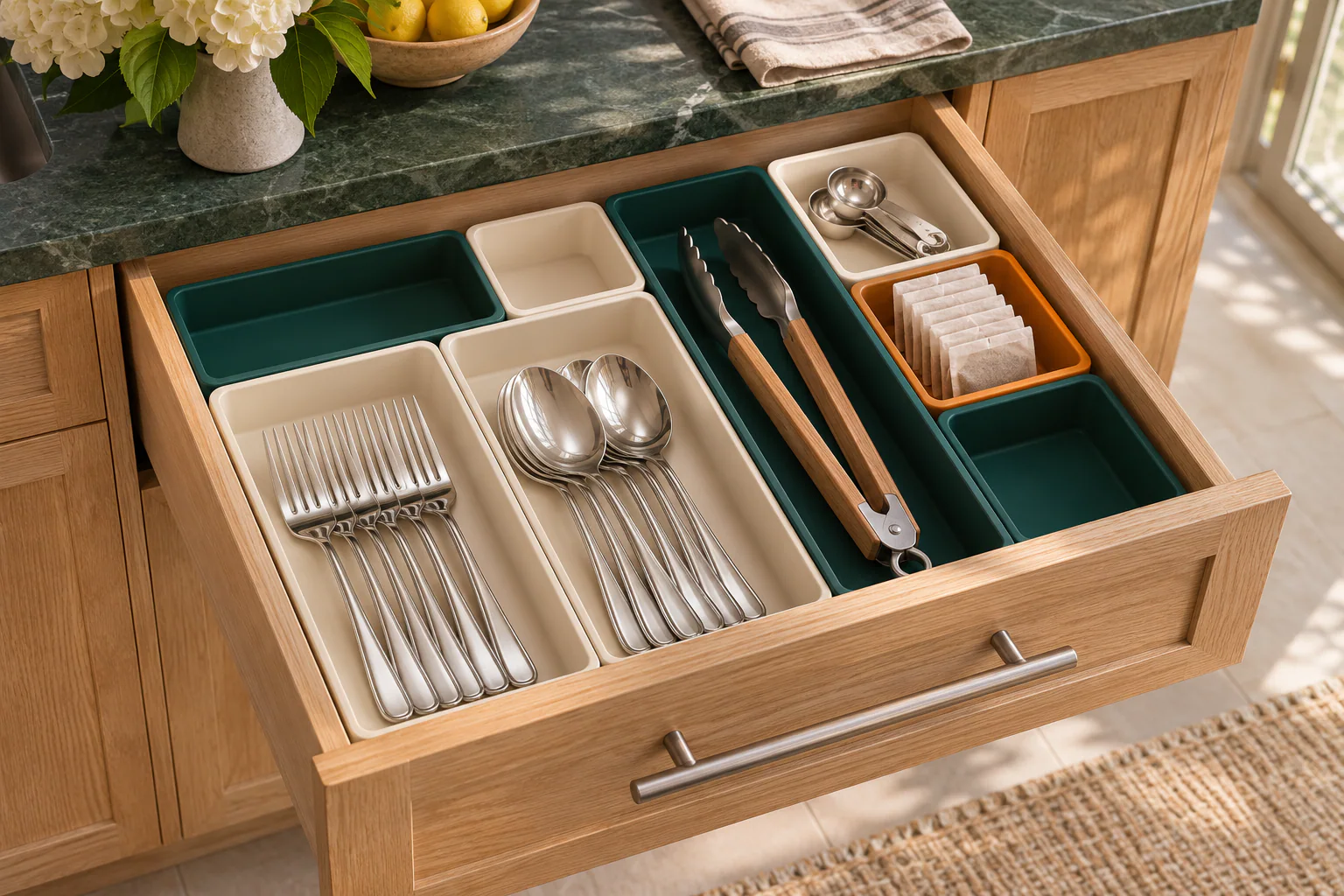
Find the clearance hidden behind the drawer front
Measure across the bottom near the front, middle and back. Then repeat at the height where the widest spoon bowl would rest. A tapered side, screw head or rail can narrow the available space higher up. Take the shorter useful measurements into the layout. Check the opening the loaded tray must pass through as well as the floor it will sit on.
Depth is the other half of the problem. Measure the longest table knife and compare it with the clear front-to-back distance. If the handle sits against the drawer front, a closed pocket at both ends can make it difficult to lift. Mark the end you want to pick up on your paper plan.
Compare two lanes with three
With 228.6 mm of true inside width, simply dividing by three gives 76.2 mm per lane before the outer margins and dividers come out. Draw that on paper and set the broadest serving spoon in one lane. Does your thumb still fit beside it? Do tightly stacked dinner forks tip sideways into the neighboring lane? If so, three equal lanes are a poor use of otherwise adequate space.
Try a different split: one broad spoon lane and two narrower lanes for forks and knives. Or place everyday forks and spoons side by side and run the knives in a separate slim side channel. The width of the handles, bowls and your hand should decide where the lines go. Measure the stack as you normally put it away, including any nested pieces.
Turn one stack around and test dinner for two
Lay forks with handles toward you on one side. Try the spoons pointing the other way so the widest utensil ends occur at opposite ends of the drawer. This is most useful for shaped or staggered dividers; straight, full-length lanes may gain access rather than actual width. Reach for two place settings without looking down the whole time, as you would while cooking. Keep the arrangement that feels natural.
Set aside rarely used serving utensils if the drawer is fighting for space. A short front bin may be more useful for corn holders or measuring spoons than a fourth lane that cannot hold your everyday forks.
Take the successful outline into ForgeGrid
Enter the verified inside dimensions in the kitchen planner. Add the long lanes first and use the remaining depth for a removable small-item bin if one genuinely fits. If you need unequal or shaped pockets, send the broadest utensil width, the longest length and an overhead picture of the arrangement. The studio can see why a standard equally divided tray would waste your drawer.
Questions & answers
Does “9-inch drawer” usually describe inside or outside width?
A retailer or cabinet drawing may be describing a cabinet module, drawer front or insert. Measure your actual inside span and compare it with the proposed organizer's outside dimensions before placing an order.
Can forks and spoons share one lane?
They can if the stack remains easy to separate. Try one family meal using the paper layout. If people have to lift every fork to find a spoon, a wider shared bin has cost you convenience.
What if cutlery handles flare at the end?
Measure across the flared end with several pieces nested as stored. Check both ends of the lane, because a handle that fits at the front can still bind when a stack slides backward.
Should I plan an exact wall-to-wall fit?
Give the studio the measured cavity and any obstructions. Leave the decision about fabricated clearance to the fit review. A rigid tray that cannot pass through the opening or lift out for cleaning will be difficult to live with.