
How to fit an under-seat tackle tray through a narrow boat hatch
A locker can be large enough to hold a tackle tray and still have an opening too small to remove it. Measure the clear hatch, the cavity below and the path between them. Then test a cardboard box the same outside size as the proposed loaded tray. A flat template alone can slip through a turn that a full-height tote cannot make.
Plan my under-seat boat organizer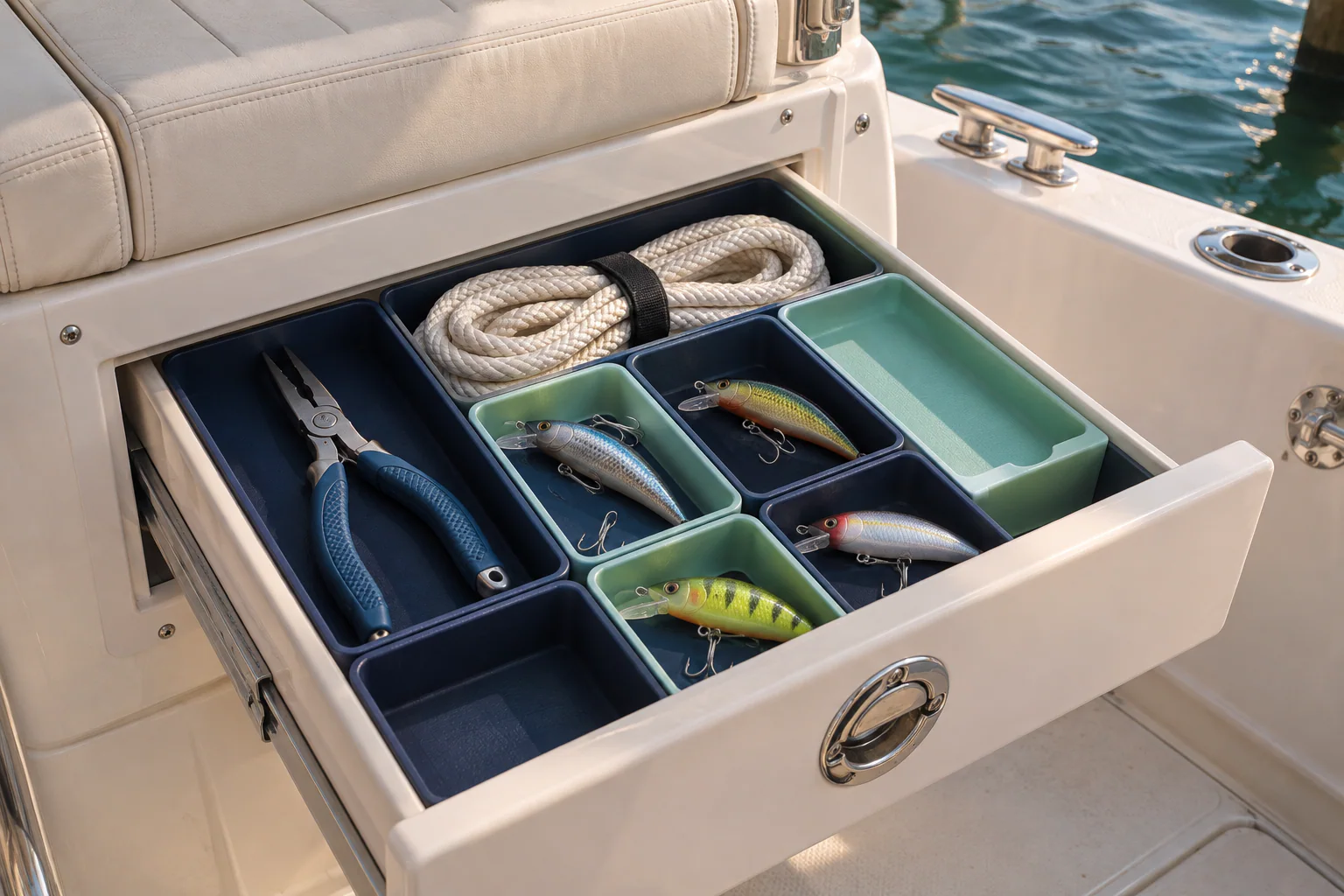
Measure the opening you can pass an object through
With the boat secured and the compartment empty, open the seat or hatch to its normal supported position. Measure inside the frame, clear of rounded corners, latch hardware and hinge covers. The outside dimensions of a hatch flange describe the mounting hardware. A tray must pass through the smaller usable opening inside it.
Mark your measurements on paper with the bow direction and hinge side. Photograph the open hatch from above and at the angle where your hand enters. A recessed seat cushion or gas strut can overhang the opening even if the frame below it looks clear. Keep the boat’s original supports, drainage and service access available.
Map the space underneath
Measure the flat resting area below the lip. Note changes in depth, sloping hull surfaces and raised features that would leave a rectangular tray rocking. Check the lowest point above the parked tray, including the underside of a closed latch or cushion. Only plan storage in a compartment intended for that purpose. A custom organizer for an existing locker can be designed without changing its opening.
An illustrative locker has a 315 × 230 mm clear mouth and a 405 × 275 mm floor. A single 390 mm tray might fit on that floor, but cannot enter level through a 315 mm opening in the same orientation. It might turn or tilt through. The depth needed for that maneuver depends on the tray’s height and the surrounding hardware.
Test the trip out with the pieces you carry
Build a light cardboard box to the proposed outside length, width and height, including any handle. Add closed tackle boxes as stand-ins for the load. Try to remove the mockup with the handles in reach, while leaving hooks and sharp items safely in their own gear cases. Notice whether you have to tilt so far that contents would leave an open pocket.
Try two smaller trays if the single tote catches. You might put leaders and spools in one lift-out unit and boxed lures in the other. A shorter tray you can withdraw level has an advantage over a larger one that requires turning sideways every time. Leave access to inspect and clean the original compartment.
Give the studio both outlines
Start the ForgeGrid boat planner with the usable footprint where the tray will rest. Include the separate clear hatch measurements, usable height, diagram of obstructions and photos of the mockup going in and out. Describe how the boat owner secures gear in that locker underway. Ask for a removable organizer for your stored items; the boat’s hatch and existing retention arrangements still perform their original functions.
Questions & answers
Which matters more, the hatch opening or the locker floor?
Both. The opening and removal path govern whether the tray can be installed and retrieved. The floor and closed-lid clearance govern whether it can sit correctly once inside.
Can I tilt the tray to fit a smaller opening?
Sometimes. Test the full three-dimensional mockup at the actual opening angle. Also check how the loaded compartments behave when tilted and whether you still have room to hold the tray.
Should I use one big tackle tray or two small ones?
Two trays can make sense when the hatch is narrow or different gear comes out at different times. A single tray works well when the opening admits it level and it stays manageable with your normal load.
Is an open printed tray waterproof or suitable for loose gear underway?
An open tray organizes items inside an existing locker. Use suitable protective containers for contents that must stay dry, and use the boat’s designated storage and retention provisions for gear in motion.